


Winter can be tough on our homes, and that includes the gutters. We often forget about them until something goes wrong. If you’ve noticed some issues lately, it might be time to think about gutter repair services before the real cold hits. We’ve put together a list of signs that suggest your gutters need some attention. Ignoring these can lead to bigger problems down the road, so let’s take a look at what to watch out for.
Key Takeaways
- Sagging gutters, water stains, cracks, rust, mold, peeling paint, loose fasteners, clogged downspouts, foundation erosion, and overflowing gutters are all signs your system needs attention.
- These issues can worsen with winter weather, leading to more costly repairs if not addressed promptly by gutter repair services.
- Regular checks and timely repairs help protect your home’s structure from water damage, especially during the colder months.
1. Sagging Gutters
We’ve all seen it on houses around town – those gutters that just don’t look right. They seem to be pulling away from the house, creating a noticeable dip in the middle. This isn’t just an eyesore; it’s a clear sign that your gutters are struggling and likely need attention before winter really sets in.
When gutters start to sag, it usually means one of a few things is happening. The weight of debris, like leaves and twigs, can build up over time, especially if they aren’t cleaned out regularly. This extra weight puts a strain on the gutters and their fasteners. Another common culprit is ice dams that form in colder months. As water freezes and thaws repeatedly, it can weaken the connections holding the gutters in place. The most common reason we see for sagging gutters is that the fasteners, the screws or nails that attach the gutter to the fascia board, have loosened or pulled out.
Here’s why sagging gutters are a problem we need to address:
- Water Pooling: A dip in the gutter means water won’t flow properly towards the downspouts. Instead, it will collect in that low spot.
- Increased Strain: The sagging itself puts more stress on the remaining fasteners and the gutter material, making the problem worse.
- Ice Damage: In winter, that pooled water can freeze, expanding and causing even more damage to the gutter and potentially the fascia board it’s attached to.
- Overflow Issues: When water can’t get to the downspouts, it’s more likely to spill over the sides, potentially damaging your roofline and siding.
We often find that the fasteners are the first to go. They might be rusted, bent, or simply not strong enough to hold the gutter’s weight, especially when it’s full of water or ice. It’s worth taking a walk around your house and looking up. Do your gutters appear to be hanging lower in some sections than others? If so, it’s time to schedule a check-up.
2. Water Stains Under Gutters
We’ve all seen those tell-tale dark streaks running down the siding below our gutters. If you’re noticing water stains appearing under your gutters, it’s a pretty clear sign that something isn’t right. This usually means water is backing up or overflowing from the gutter system and then dripping down the exterior of your home.
These stains aren’t just an eyesore; they can indicate underlying issues that need attention before winter really sets in.
Here’s what those stains might be telling us:
- Leaking Seams or Joints: The sections where gutters connect, or where they meet a downspout, are common spots for leaks. If the sealant has failed or the joint has come loose, water can seep out.
- Improper Slope: Gutters need to be angled correctly towards the downspouts. If the slope is off, water can pool in certain areas, leading to overflow and staining.
- Damage or Holes: Small cracks or holes in the gutter material itself will allow water to escape.
- Overflowing Due to Clogs: When leaves, twigs, or other debris block the gutters or downspouts, water has nowhere to go but over the edge.
We really need to check these areas closely. Ignoring these stains is like ignoring a small leak in your roof – it might seem minor now, but it can lead to bigger problems down the road, like water damage to your siding, fascia, and even your foundation.
It’s easy to dismiss water stains as just dirt, but when they appear consistently under your gutters, it’s a signal that your drainage system isn’t working as it should. Addressing this promptly can save us a lot of headaches and repair costs later.
3. Gutter Cracks
We’ve all seen them – those little splits and breaks that appear in our gutters. Sometimes they’re small, barely noticeable, but other times they can be quite significant. These cracks are a clear sign that your gutters are compromised and need attention before winter really sets in.
Think about it: water is constantly flowing through your gutters. If there’s a crack, even a tiny one, that water has an escape route. In the colder months, this becomes a bigger problem. When temperatures drop, any water trapped in these cracks can freeze. As water freezes, it expands, and this expansion puts extra pressure on the already weakened material. Over time, this freeze-thaw cycle can turn a small crack into a much larger one, or even cause sections of the gutter to break apart.
We often find these cracks due to:
- Impact damage from falling branches or hail.
- Material fatigue from years of exposure to the elements.
- Improper installation that puts stress on the seams.
If you spot a crack, it’s not something to ignore. Even a small leak can lead to water pooling around your foundation, which is never a good thing, especially with the ground starting to freeze.
It’s easy to think a small crack isn’t a big deal, but water finds a way. Winter weather only makes these small issues much, much worse. We’ve seen it happen time and again where a minor crack leads to major problems down the line.
We recommend inspecting your gutters for any signs of splitting or separation. If you find any, it’s best to get them repaired or replaced before the heavy snow and ice arrive. Ignoring them can lead to more costly repairs later on.
4. Rust Spots
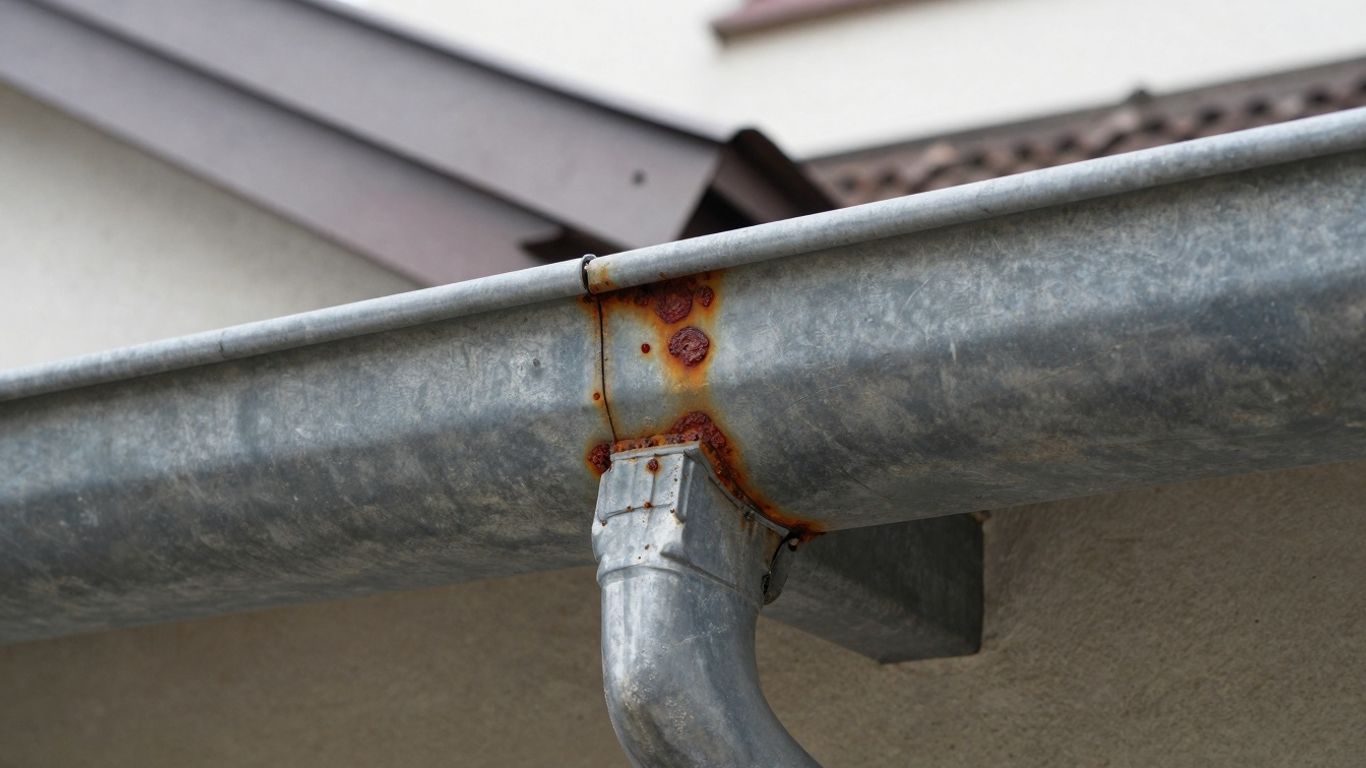
We’ve all seen those little orange-brown spots appear on metal things, right? Well, when we notice them on our gutters, it’s a pretty clear sign that something’s not quite right. Rust on your gutters means the protective coating has worn away, leaving the metal exposed to the elements. This is especially common with older metal gutters, like those made from steel or aluminum, that haven’t been maintained well.
Think about it: water is constantly running over and sitting on your gutters. If there’s a tiny scratch or a weak spot in the paint or coating, water gets in there and starts to do its thing. Over time, this leads to corrosion, which is basically the metal breaking down.
Here’s what we usually see when rust starts to take hold:
- Small, powdery spots that can be wiped away (at first).
- Larger patches that look like flaky scales.
- Holes starting to form in the gutter material.
If you see rust, it’s a good idea to check the surrounding areas too. Sometimes, rust can spread, and you might find it on downspouts or even the fasteners holding everything together. Ignoring these spots can lead to bigger problems down the line, like leaks or even the gutter collapsing.
It’s easy to think a little bit of rust isn’t a big deal, but it’s a warning. It tells us the material is weakening and won’t be able to do its job of protecting our homes for much longer. We need to address it before it gets worse.
5. Mold or Mildew Growth
We’ve all seen that fuzzy green or black stuff on damp surfaces, right? Well, if you’re spotting mold or mildew around your gutters, especially on the fascia boards or siding just below them, it’s a pretty clear sign something’s not right. This usually means water isn’t draining away properly. Instead, it’s sitting there, creating a damp environment where these little growths love to take hold.
Think about it: gutters are supposed to channel water away from your house. When they’re blocked, damaged, or just not sloped correctly, that water backs up. It can then seep over the edges or drip down the sides, constantly wetting the wood or paint underneath. This persistent dampness is a breeding ground for mold and mildew.
Here’s what we typically see when this happens:
- Patches of green, black, or gray fuzzy growth.
- A musty smell near the gutters, especially after rain.
- Deterioration of the material beneath the gutters, like soft wood or bubbling paint.
It’s not just about how it looks, either. Mold and mildew can actually start to break down building materials over time. Plus, some types of mold can cause health issues if you’re breathing in the spores constantly. So, if you notice this growth, it’s a good idea to check your gutters for blockages or damage right away. We usually find that clearing out debris or fixing a small leak solves the problem pretty quickly.
6. Peeling Paint
We’ve all seen it – that little bit of paint flaking off the edges of our gutters. Usually, we might just ignore it, thinking it’s just a bit of wear and tear. But when we’re talking about getting ready for winter, peeling paint can be a bigger sign than we realize. It often points to moisture getting trapped behind the paint, which can lead to rust and rot underneath.
Think about it: if water is sitting on or behind the paint, it’s not draining properly. This trapped moisture is a problem year-round, but it becomes especially concerning as temperatures drop. Ice can form, expanding the cracks and making the peeling worse. Over time, this can weaken the gutter material itself.
Here are a few things to look for:
- Small chips or flakes around seams and edges.
- Bubbling paint, which indicates moisture underneath.
- Paint that comes off easily when you touch it.
This deterioration isn’t just about looks. It’s a warning sign that the protective layer on your gutters is failing, leaving the metal exposed to the elements. We need to address this before the harsh winter weather sets in and causes more serious damage.
If you notice significant peeling, especially if it’s accompanied by rust or soft spots in the material, it’s time to get them checked out. A fresh coat of paint might seem like a simple fix, but if the underlying issue isn’t resolved, the problem will just come back.
7. Loose or Damaged Fasteners
We often overlook the small things, don’t we? When it comes to our gutters, those little screws, brackets, and hangers are incredibly important. If we notice any of our gutters are pulling away from the house, it’s usually because the fasteners holding them up have loosened or broken. This is a common problem, especially after a harsh winter with lots of ice and snow.
Think about it: water freezes, expands, and puts a lot of pressure on everything. Over time, this can wiggle even the tightest screws loose. We might see gaps between the gutter and the fascia board, or the whole gutter might look like it’s sagging more than usual. Loose fasteners mean your gutters aren’t doing their job properly, which can lead to water damage to your roof and walls.
Here are some things we should look out for:
- Visible Gaps: Check if there’s daylight showing between the gutter and the house.
- Wobbly Gutters: Gently try to move the gutter. If it feels loose or shifts easily, the fasteners are likely the issue.
- Dents or Bends: Sometimes, the hangers themselves can get bent out of shape from heavy snow or ice.
- Missing Parts: We might even find that screws or brackets have completely fallen off.
If we see any of these signs, it’s best to get them fixed before the next rain or snow. We can usually tighten loose screws or replace broken hangers ourselves, but if a lot of them are damaged, it might be time to call in a professional to make sure everything is secure.
8. Clogged Downspouts
We often forget about the downspouts, don’t we? They’re the unsung heroes of our gutter system, carrying water away from the house. But when they get clogged, that’s when trouble starts. Leaves, twigs, and other debris can easily build up in these narrow channels, especially after a heavy fall or during a wet winter.
A blocked downspout can cause water to back up into your gutters, leading to overflow and potential damage to your roofline and siding. It’s not just about the mess; it’s about preventing bigger problems down the road. If you notice water pooling around your foundation or see water spilling over the sides of your gutters even when it’s not raining heavily, your downspouts are a prime suspect.
Here are some signs that your downspouts might be clogged:
- Water overflowing from the top of the gutter, not flowing down the downspout.
- Visible debris like leaves or mud packed into the top opening of the downspout.
- A strange gurgling sound coming from the downspout during or after rain.
- Water spraying out from seams or joints in the downspout instead of flowing freely.
Clearing these blockages is usually a straightforward task, but if the clog is deep inside or the downspout seems damaged, it might be time to call in a professional. We’ve found that a simple hose flush can often do the trick for minor clogs, but persistent issues need a closer look.
Ignoring a clogged downspout is like leaving a leaky faucet running; it might seem small now, but the cumulative effect can lead to significant water damage over time, affecting everything from your landscaping to your home’s structural integrity.
9. Foundation Erosion
We often think about gutters protecting our roofs and walls, but their job extends much further down. When gutters aren’t working right, especially during the wet winter months, water can pool around the base of our homes. This constant moisture is a major cause of foundation erosion. Over time, the soil around your foundation can wash away, leaving it exposed and weakened. This might not seem like a big deal at first, but it can lead to serious structural problems down the road. We’ve seen homes where minor gutter issues turned into costly foundation repairs because the water problem wasn’t addressed.
Here’s how it happens:
- Water Overload: Gutters that are clogged or damaged can’t channel water away effectively. Instead, it spills over the sides and lands right next to your foundation.
- Soil Saturation: The ground near your house becomes waterlogged. This makes the soil softer and more prone to washing away.
- Freeze-Thaw Cycles: In winter, this saturated soil can freeze. When it thaws, the ground expands and contracts, further loosening the soil and exacerbating erosion.
- Structural Weakness: As soil erodes, it creates voids under your foundation. This lack of support can cause cracks in walls, uneven floors, and other significant damage.
We need to be mindful of the signs of this happening. Look for damp spots near your foundation after rain, or notice if the soil seems to be pulling away from the house. Sometimes, you might even see small cracks appearing in the foundation itself. These are all indicators that your gutters might be contributing to a bigger problem.
Addressing gutter issues before they lead to foundation problems is always the smarter, more cost-effective approach. A little bit of maintenance now can save us a lot of headaches and expense later on.
10. Overflowing Gutters
We’ve all seen it, right? Water just pouring over the sides of the gutters like a mini-waterfall, even when it’s not raining that hard. This is a pretty obvious sign that something’s not right. It means your gutters can’t handle the water flow, and that’s a problem that can get worse fast.
When gutters overflow, the water doesn’t just disappear. It goes where it shouldn’t. We’re talking about water pooling around your foundation, which can lead to serious structural issues down the line. It can also soak into your siding, causing rot and mold, or even damage your landscaping. Ignoring overflowing gutters is like ignoring a leaky faucet – it might seem small now, but it can lead to big, expensive problems.
Here are a few reasons why your gutters might be overflowing:
- Clogs: Leaves, twigs, and other debris build up and block the water’s path.
- Improper Slope: Gutters need to be angled correctly towards the downspouts. If they’re flat or sloped the wrong way, water sits there instead of flowing.
- Damage: Dents, cracks, or sections pulling away from the house can disrupt the flow and cause leaks.
- Undersized Gutters: Sometimes, the gutters themselves are just too small for the amount of rain your roof collects.
We usually see this happen most often after a heavy rain or when snow starts to melt quickly. It’s that sudden rush of water that overwhelms a system that’s already struggling. If you notice water spilling over the edges, it’s time to take a closer look. We recommend checking them after the first few significant rainfalls of the season, and again after any major storms.
Don’t wait for the overflow to become a bigger issue. Addressing the problem early can save you a lot of headaches and money. It’s better to clear out some leaves or fix a loose section now than to deal with foundation repair later.
Don’t Wait for the Snow to Pile Up
We’ve looked at some common signs that tell us our gutters might be in trouble before winter really hits. It’s easy to put off these kinds of home tasks, I know. I’ve certainly been guilty of that myself. But when it comes to gutters, ignoring problems can lead to bigger, more expensive headaches down the road, like water damage to your home’s foundation or even ice dams. So, take a few minutes to check things out. If you spot any of the issues we discussed, it’s probably best to get them fixed now. A little bit of work now can save us a lot of worry and money when the cold weather arrives.
Frequently Asked Questions
Why do gutters sag, and what’s the danger?
Gutters often start to droop when they’ve been holding too much water or ice for too long. This extra weight can bend them away from the house. If they sag too much, water won’t flow to the downspouts correctly, and it might just spill over the sides, which can cause damage to your home’s exterior and even the foundation.
What does it mean if we see rust on our gutters?
Seeing rust spots usually means your gutters are made of metal and the protective coating has worn away in those areas. This exposes the metal to moisture, leading to rust. If left unaddressed, rust can weaken the gutter material, eventually creating holes and making them less effective at directing water.
How can we tell if our downspouts are blocked, and why is it a problem?
A blocked downspout often shows itself when water doesn’t flow out of the bottom as it should, or it might back up and spill over the top of the gutter. Leaves, twigs, and other debris are common culprits. When downspouts are clogged, water can’t drain away from your house properly, leading to pooling water around the foundation, which we want to avoid.
