


When winter rolls around, we often think about adding more insulation to our walls and attics to keep the cold out. But what about our skylights? These glass panels in our roofs can be a source of heat loss if we’re not careful. In this article, we’ll look at how skylights affect our home’s warmth and what we can do to make them work better with our roof insulation enhancements.
Key Takeaways
- We need to think about how heat moves through skylights, especially in colder months, to stop warmth from escaping our homes.
- Picking the right kind of skylight makes a big difference in how well our homes stay warm and how much energy we use.
- Putting skylights in correctly and sealing up any gaps around them are important steps for better roof insulation enhancements and a cozier house.
Maximizing Skylight Efficiency For Roof Insulation Enhancements
When we think about keeping our homes warm in the winter, our minds often go straight to walls and attics. But what about those glass panels in our roofs? Skylights, while lovely for letting in natural light, can also be a weak spot for heat loss if we’re not careful. We need to look at how they interact with our overall roof insulation strategy.
Understanding Heat Transfer Through Skylights
Heat moves in a few ways: conduction, convection, and radiation. With skylights, all three can play a part. Conduction is when heat moves directly through the materials – the glass, the frame. Convection happens when warm air inside rises and touches the cooler glass, losing its heat. Radiation is when heat waves escape through the glass, especially if it’s not coated properly. The biggest culprit for heat loss in older or poorly designed skylights is often a combination of poor sealing and the inherent conductivity of the frame materials. We’ve seen firsthand how much difference even a small gap can make.
Here’s a quick look at how heat can escape:
- Conduction: Heat traveling through the glass and frame.
- Convection: Warm air cooling as it contacts the glass surface.
- Radiation: Heat energy passing through the glass itself.
Choosing Energy-Efficient Skylight Options
Not all skylights are created equal, especially when it comes to keeping the heat in. When we’re looking to upgrade or install new ones, we need to pay attention to a few key features. The type of glass is a big one. Look for double or triple-paned units. These have layers of glass with gas-filled spaces in between, like argon or krypton. These gases are better insulators than plain air. We also want to check the coatings on the glass. Low-E (low-emissivity) coatings are designed to reflect heat back into the room during the winter, and keep it out during the summer. The frame material matters too. Wood or vinyl frames generally perform better than aluminum, which can conduct heat more readily unless it has a thermal break. Making the right choice upfront can save us a lot on heating bills down the line.
When selecting new skylights, consider these points:
- Glazing: Opt for double or triple-pane glass with inert gas fills (argon or krypton).
- Coatings: Specify Low-E coatings designed for cold climates.
- Frame Material: Choose wood, vinyl, or thermally broken metal frames.
- U-Factor: Look for a low U-factor, which indicates better insulation.
- SHGC: For winter, a higher Solar Heat Gain Coefficient (SHGC) can be beneficial, allowing more solar warmth in, but this needs balancing with summer heat.
We’ve found that the initial cost of a more energy-efficient skylight is often recouped through reduced energy expenses over time. It’s an investment in comfort and savings, not just a window to the sky.
Integrating Skylights Into Your Roof Insulation Strategy
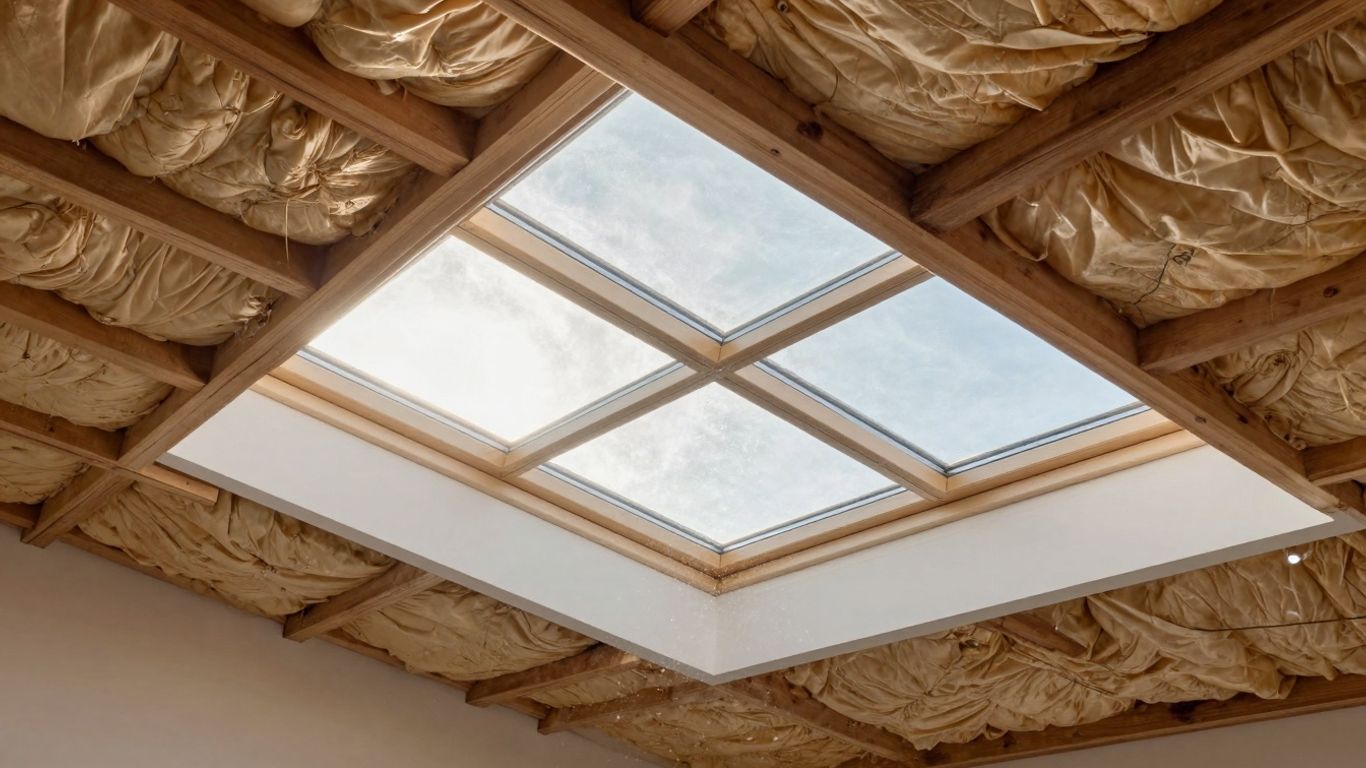
So, we’ve talked about how skylights work and picking the right ones. Now, let’s get down to how we actually make them work with our roof insulation, not against it. It’s not just about slapping a skylight in; it’s about making it a team player in keeping our homes warm when it’s cold outside. We need to think about how it all fits together.
Proper Installation Techniques for Optimal Performance
This is where things can go sideways if we’re not careful. A poorly installed skylight is basically a hole in our insulation. We want to avoid that at all costs. The way it’s put in makes a big difference.
- Flashing is Key: This is the material that seals the edges where the skylight meets the roof. Good flashing stops water and air from getting in. We need to make sure it’s done right, following the manufacturer’s instructions to the letter.
- Framing Matters: The frame around the skylight needs to be properly supported and insulated. We don’t want cold spots forming around the edges because the framing isn’t up to par.
- Ventilation Considerations: Sometimes, how we vent our roofs can affect the skylight area. We need to make sure the skylight installation doesn’t mess with the roof’s ability to breathe properly, which can cause other problems.
We’ve seen some jobs where the installers just didn’t pay enough attention to the details around the skylight frame. It’s like they treated it as just another roof opening, but it’s not. It needs special care.
Sealing and Weatherstripping Skylight Perimeters
Once the skylight is in, we can’t just forget about it. The edges, where the glass or plastic meets the frame, and where the frame meets the roof structure, are prime spots for drafts. We need to seal these up tight.
- Caulking: Using a good quality exterior caulk around the outside edges of the skylight frame where it meets the roof is a must. This stops water and air from sneaking in.
- Weatherstripping: For the operable parts of the skylight (if it opens), good quality weatherstripping is important. This creates a seal when it’s closed, stopping drafts.
- Interior Air Sealing: Don’t forget the inside! We need to make sure the drywall or other interior finishes are sealed tightly to the skylight frame. Any gaps here can let warm air escape.
We found that using a combination of spray foam insulation in larger gaps and then a good quality sealant for the smaller, more precise areas worked best for us. It’s about creating a complete barrier.
The goal here is to treat the skylight not as an exception to our insulation plan, but as an integral part of it. Every seam, every joint, every edge needs to be considered for its potential to let heat out or cold in. We want it to be as efficient as the rest of our insulated roof.
Here’s a quick look at what we typically check:
| Area to Seal | Material Recommended | Notes |
|---|---|---|
| Exterior Frame Edge | Exterior Caulk | Apply generously, smooth for water runoff |
| Operable Window Seal | Foam Weatherstripping | Replace if cracked or compressed |
| Interior Trim Gap | Sealant or Caulk | Paintable options are good for looks |
Wrapping Up Our Skylight Chat
So, we’ve talked a lot about skylights and keeping our homes warm when it’s cold outside. It turns out these glass panels in our roofs aren’t just for letting in light; they can actually play a part in how well our houses hold heat. We’ve seen how different types and how we install them really matter. Making sure they’re sealed up right and maybe even adding special glass can make a big difference. It’s not just about saving a bit on heating bills, though that’s nice. It’s also about making our living spaces more comfortable when the snow is falling. We think it’s worth looking into how your own skylights are doing their job this winter.
Frequently Asked Questions
How can we make sure our skylights don’t let heat escape during the cold months?
To keep heat inside during winter, we need to think about how heat moves through our skylights. Heat can escape through the glass and the frame. We should choose skylights that are made to keep heat in, like those with double or triple panes of glass and special coatings. Making sure they are installed correctly and sealed up tight is also super important.
What’s the best way to install a skylight so it helps keep our house warm?
When we put in a new skylight, or even check an old one, how it’s put in makes a big difference. We need to make sure there are no gaps where cold air can sneak in or warm air can get out. This means sealing around the edges really well and using materials that stop air from moving. Proper installation is key to making the skylight work with our home’s insulation, not against it.
Are there special types of skylights that are better for saving energy in the winter?
Yes, absolutely! We can find skylights designed specifically to be energy smart. These often have multiple layers of glass, sometimes with a gas sealed between them, which acts like a blanket. They might also have special films or coatings on the glass that reflect heat back into the room. Picking one of these energy-saving models is a smart move for keeping our homes cozy and our heating bills lower.
