


Winter weather can bring beautiful snow, but it can also bring heavy loads to our roofs. We often wonder if the snow piling up is too much for our homes. Dealing with roof snow can be tricky, and sometimes, it’s best to get help. We’ll look at how to tell if your roof has too much snow and what to do about it, including when to think about professional roof snow removal services.
Key Takeaways
- We need to watch for signs that our roof might be struggling under the weight of snow, like cracks or sagging.
- Using tools like roof rakes can help remove snow, but we must do it carefully to avoid damaging the roof or ourselves.
- For heavy snow or if we’re unsure, it’s smart to hire professional roof snow removal services to keep our homes safe.
Assessing Roof Snow Accumulation
Before we even think about grabbing a shovel, we need to figure out just how much snow is sitting up there. It’s not always obvious, and sometimes a light dusting can hide a lot more weight than we realize. We need to be smart about this.
Identifying Signs of Dangerous Snow Loads
Sometimes, your house will give you clues that the snow load is getting too heavy. We should keep an eye out for these things. The most obvious sign is cracking or popping sounds coming from your ceiling or walls. This usually means the weight of the snow is starting to stress the structure of your home. You might also notice doors and windows that suddenly become difficult to open or close. If you see new water stains appearing on your ceiling, especially after a thaw and refreeze cycle, that could indicate ice dams forming, which add even more weight and can lead to leaks.
- New cracks in drywall or plaster
- Doors or windows sticking
- Visible sagging in the ceiling
- Water stains on the ceiling
We’ve heard stories of roofs collapsing under heavy snow, and it’s not something we want to experience. Paying attention to these warning signs is our first line of defense.
Understanding Roof Snow Load Limits
Every roof is built to handle a certain amount of weight, known as its snow load limit. This limit varies a lot depending on how your house was built, the type of roof, and even where you live. Older homes or those not built to modern codes might have lower limits. Generally, a standard residential roof can handle about 20 pounds per square foot of snow, but this can change. A foot of light, fluffy snow might only weigh a few pounds, while a foot of wet, heavy snow can weigh 20 pounds or more. It’s hard to know the exact weight without testing, but we can get a general idea.
Here’s a rough idea of snow weights:
| Snow Type | Approximate Weight per Cubic Foot |
|---|---|
| Light, fluffy snow | 5-10 pounds |
| Average snow | 10-15 pounds |
| Wet, heavy snow | 15-25 pounds |
If you have several feet of wet snow on your roof, you can see how quickly that weight adds up. We should try to estimate the depth and type of snow to get a sense of the load. If we’re unsure or suspect a heavy load, it’s better to be cautious.
Safe Roof Snow Removal Techniques
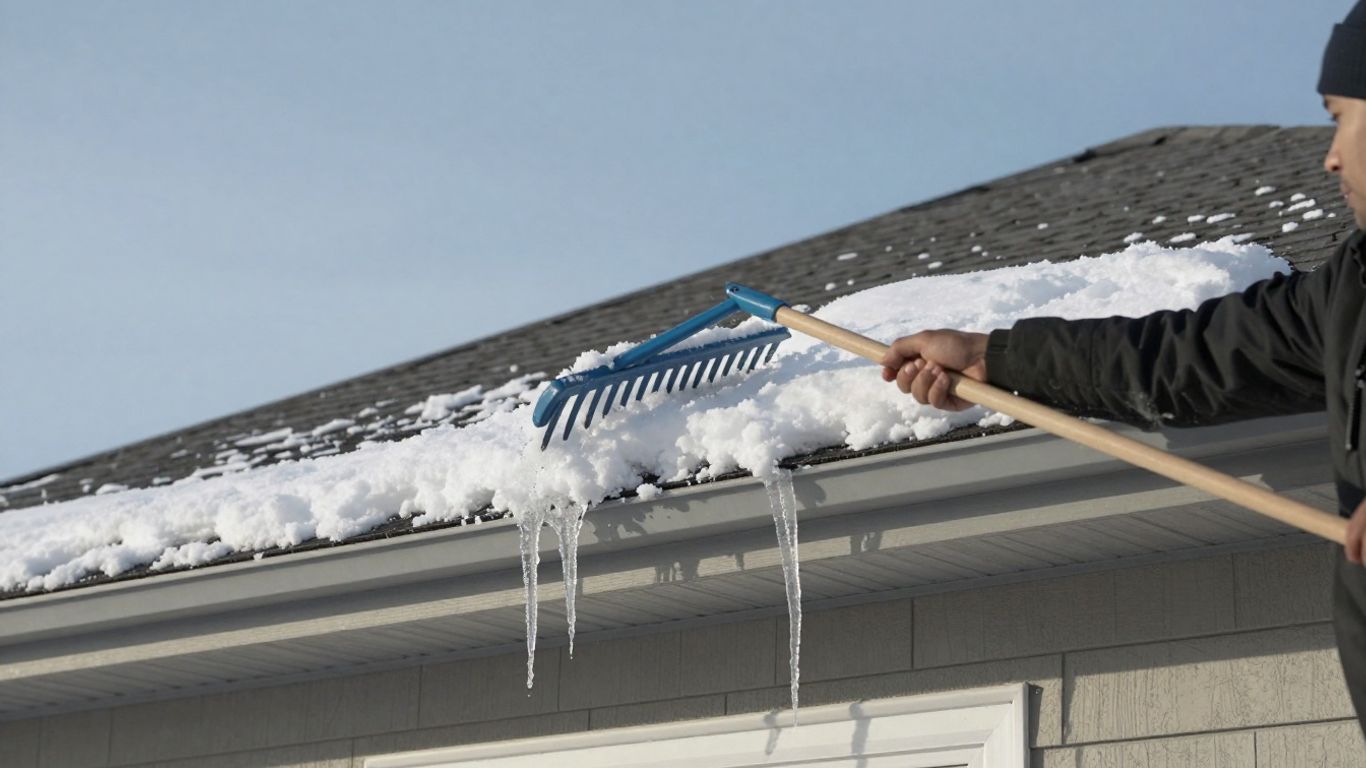
Once we’ve determined that snow removal is necessary, we need to approach the task with safety as our top priority. Working on a roof, especially a slippery, snow-covered one, carries significant risks. We’ll cover the best ways to tackle this, from using the right tools to knowing when it’s best to step back and let the pros handle it.
Using Specialized Roof Rakes Effectively
Roof rakes are our primary tool for removing snow from the ground. These long-handled tools allow us to pull snow off the lower sections of our roof without ever having to step onto it. It’s important to use them correctly to avoid damaging your shingles.
- Start from the edge: Always begin by raking snow from the edge of the roof, working your way up. This prevents large, heavy chunks of snow from falling onto areas you’ve already cleared or onto yourself.
- Pull, don’t push: The design of a roof rake is for pulling snow. Pushing can cause the rake to get stuck or damage shingles.
- Clear in sections: Don’t try to remove all the snow at once. Work in manageable sections, clearing a few feet at a time.
- Be mindful of ice dams: If you notice ice buildup, be extra careful. Sometimes, gently breaking up thin layers of ice can help, but avoid forceful prying, which can damage gutters or shingles.
We should aim to remove snow from at least the first three to six feet of the roof’s edge. This is often enough to relieve pressure and prevent ice dams from forming, which can cause water to back up under shingles and into your home.
When to Call Professional Roof Snow Removal Services
There are times when attempting snow removal ourselves just isn’t the safest or most practical option. Recognizing these situations is key to preventing accidents and property damage.
We should seriously consider calling professionals if:
- The snow accumulation is very deep, making it difficult to manage even with a rake.
- We have a steep roof pitch, or our roof is particularly high.
- There’s significant ice buildup, creating hazardous conditions.
- We don’t have the proper equipment, like a sturdy, long-handled roof rake.
- We have any physical limitations that would make the task unsafe.
Hiring professionals takes the risk out of the equation for us. They have the specialized equipment, training, and insurance to handle the job safely and efficiently. It might cost a bit, but peace of mind and avoiding a serious injury are well worth the expense.
Wrapping Up: A Safer Winter for Your Home
So, we’ve gone over why clearing snow off your roof is a good idea and how to do it without getting hurt. Remember, safety comes first. If you’re not comfortable with heights or the amount of snow, it’s always better to call a professional. We don’t want anyone taking unnecessary risks. Keeping your roof clear can prevent a lot of headaches down the road, like leaks or structural damage. Take the time to do it right, or get help. Your home will thank you for it this winter.
Frequently Asked Questions
How can we tell if our roof has too much snow on it?
We should look for signs that suggest a heavy snow load. These include ceiling cracks, sagging areas in the roof, doors that are hard to open or close, and popping or creaking sounds coming from the house. If we notice any of these, it’s a good idea to check further.
What’s the best way to remove snow from our roof ourselves?
Using a roof rake designed for snow removal is generally the safest way for us to tackle lighter snow. We should stand on the ground and pull the snow off, rather than climbing onto the roof. It’s important to pull the snow away from the house and avoid damaging shingles.
When should we hire someone else to remove the snow from our roof?
We should consider hiring professionals if the snow is very deep, if we see any of the warning signs of a heavy load, or if we’re not comfortable doing the job ourselves. They have the right tools and experience to do it safely, especially if the snow is heavy or icy.
